Insurance Restoration vs. Reconstruction
Property-damage terms are often used loosely. The useful distinction is not the label—it is which work has already happened, what remains unsafe or unresolved, and which building materials and finishes must be rebuilt.
Restoration and reconstruction guide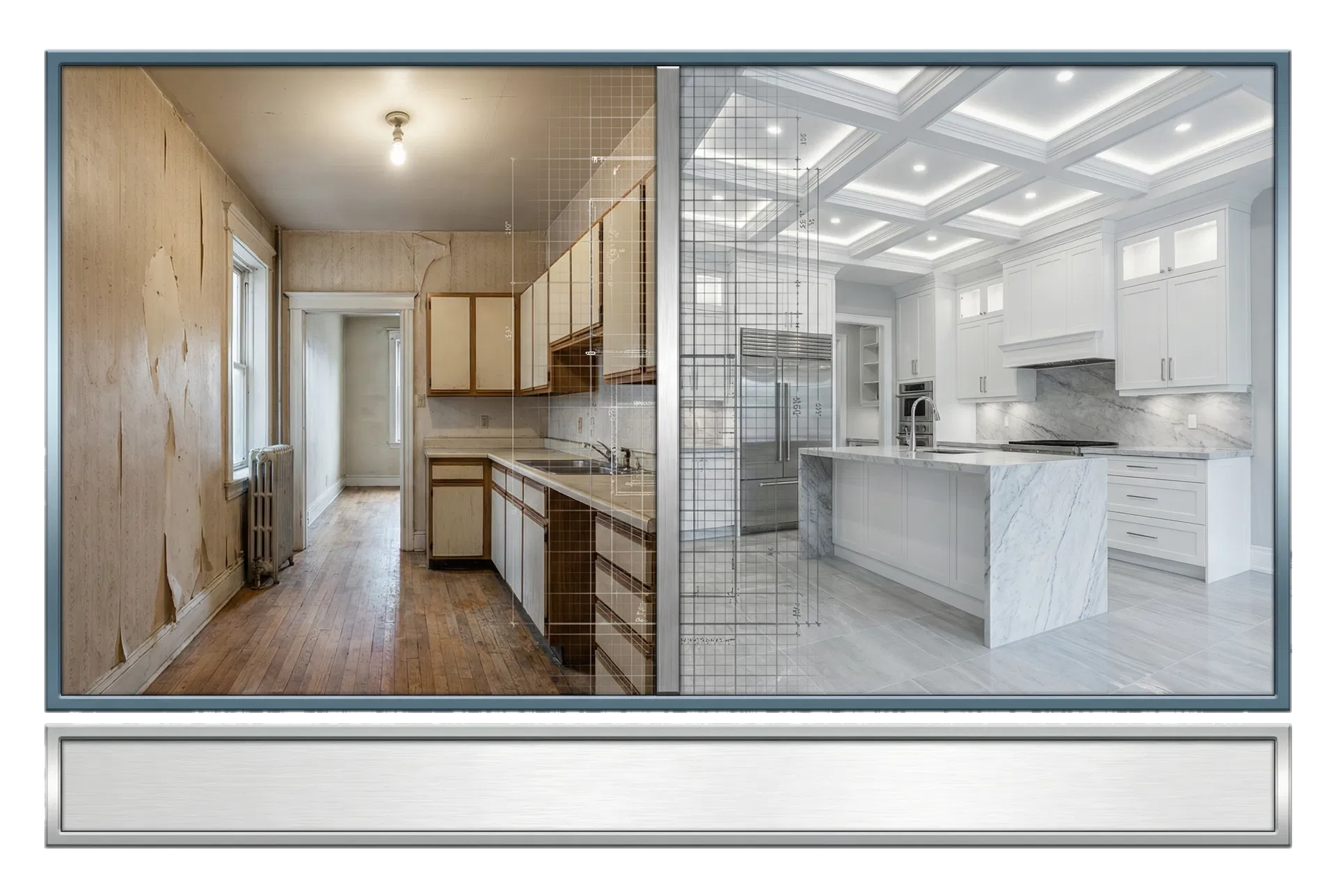
Emergency response addresses immediate conditions
Depending on the event, the first phase may involve stopping a source, protecting people, stabilizing unsafe conditions, extracting water, temporary protection, drying, testing, or remediation. These tasks are not interchangeable and may require different qualified participants.
- People and property safety
- Source control
- Temporary protection
- Drying or remediation status
- Authorization for next steps
Reconstruction rebuilds damaged assemblies
Reconstruction can include removal and replacement of drywall, plaster, ceilings, insulation, flooring, trim, doors, cabinets, tile, paint, fixtures, and other affected building elements after the area is ready for construction.
- Demolition limits
- Substrate and assembly repairs
- Trade coordination
- Finish matching
- Cleanup and closeout
Restoration may describe a goal, not one trade
A property can be restored through several stages and providers. Clarify whether a proposal covers emergency services, remediation, cleaning, construction, contents, design, temporary work, or final finishes rather than relying on the word restoration alone.
- Services included
- Services excluded
- Provider responsibilities
- Owner responsibilities
- Completion standard
Insurance and construction decisions remain separate
A contractor can document visible conditions, prepare a construction scope, communicate approved repair facts, and perform authorized work. Coverage, payment, claim value, and policy interpretation remain with the policy, carrier, and authorized claim participants.
- Policy and carrier contacts
- Authorized scope
- Owner approvals
- Construction changes
- Payment responsibilities
Ask what is ready to rebuild
Before finish reconstruction begins, confirm that the source is addressed, required drying or remediation is complete, affected materials are identified, access is available, and the authorized scope is clear enough to plan trades and selections.
- Source repaired
- Area ready for construction
- Scope documented
- Access confirmed
- Selections identified