Insurance Reconstruction After Water Damage
After the leak is stopped and the property is ready to rebuild, the next phase is construction. This guide explains how damaged assemblies become a practical reconstruction scope without promising an insurance outcome.
Insurance reconstruction guide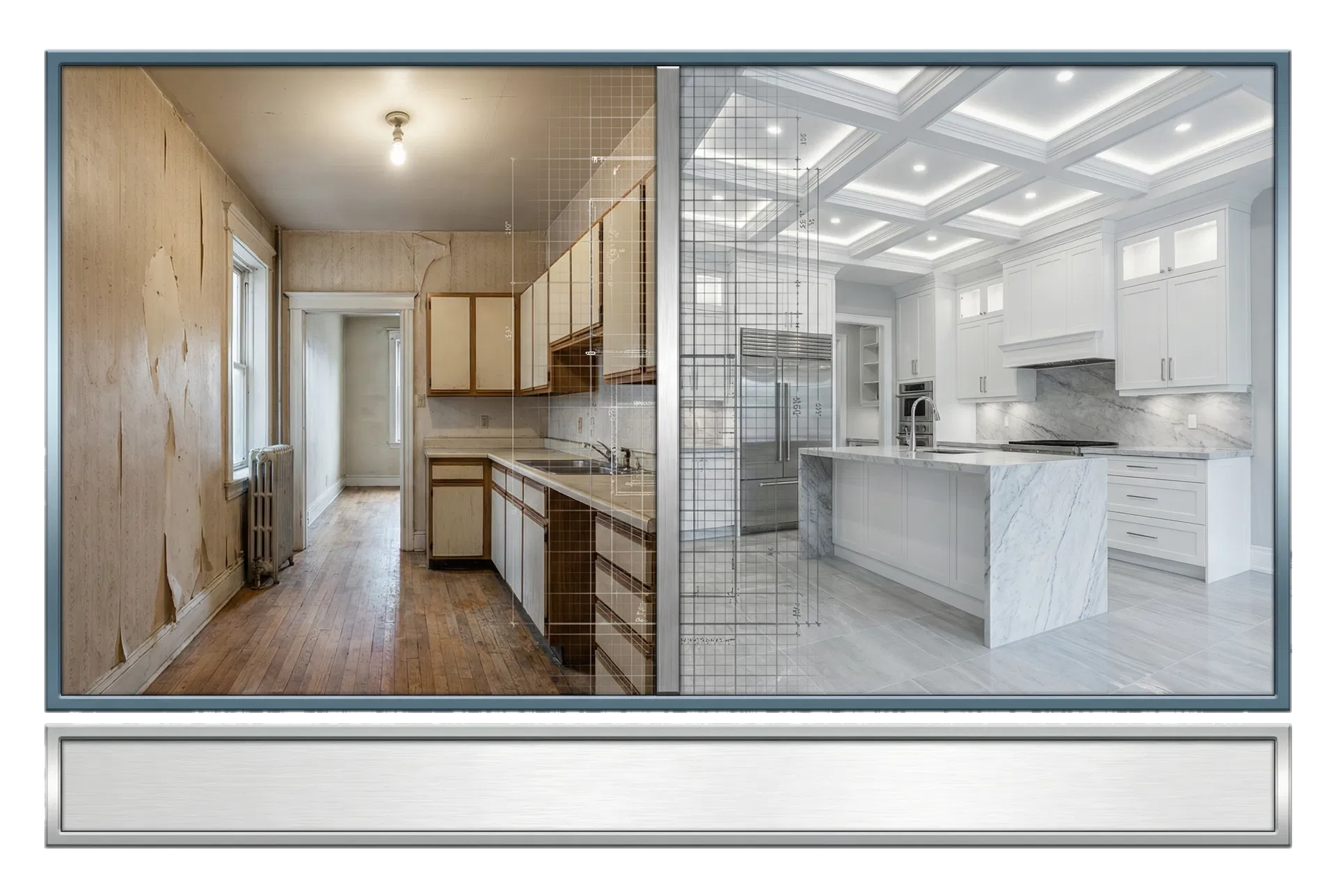
The emergency phase is not the reconstruction phase
Emergency response may involve source control, extraction, drying, temporary protection, testing, or remediation. Reconstruction begins when the property is ready for damaged building materials and finishes to be rebuilt.
- Source corrected
- Area ready for construction
- Affected materials identified
- Authorized participants identified
Translate damage into construction tasks
A visible stain is not a complete scope. The repair plan should identify affected drywall or plaster, insulation, ceilings, flooring, trim, cabinets, paint, fixtures, and adjacent finishes that may require removal, repair, replacement, or matching.
- Demolition and disposal
- Substrate and assembly repairs
- Mechanical, plumbing, or electrical coordination
- Finish replacement and matching
- Protection and cleanup
Coordinate the right participants
Depending on the property, the owner may need to coordinate with building management, a board, a landlord, an adjuster, a consultant, a remediation company, or other authorized parties. The contractor should communicate construction facts without interpreting policy coverage.
- Owner or authorized representative
- Building management where applicable
- Carrier or adjuster where authorized
- Construction and remediation participants
Confirm scope before finishes are ordered
Cabinetry, flooring, tile, paint, trim, and fixtures can introduce lead times or matching questions. Confirm responsibilities, selections, access, and sequencing before relying on a target completion date.
- Material availability
- Finish selections
- Building access
- Trade sequence
- Change communication
Close out the construction work
At completion, review repaired areas, remaining punch-list items, finish consistency, cleanup, and any maintenance or monitoring items that the owner should understand.
- Walkthrough
- Punch list
- Completion documentation
- Owner handoff